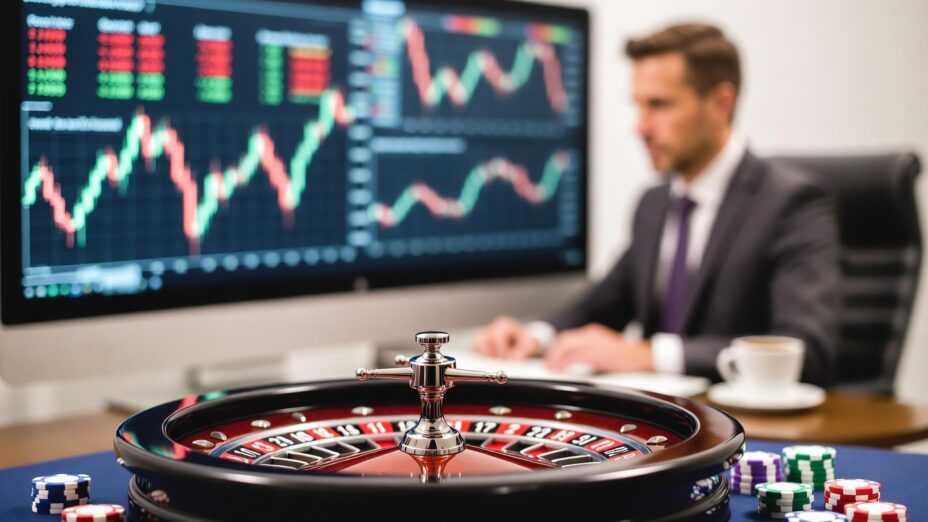
Learn the difference between gambling and trading, including the role of planning, risk management, and discipline in responsible trading.
Many people confuse trading with gambling, but the two are very different. While both involve risk and uncertainty, the way decisions are made is not the same. Understanding this difference is one of the most important lessons a trader can learn, and it is something many people are not aware of when they start.
What Gambling Really Is
Gambling is based mostly on chance. When someone gambles, they usually do not have control over the outcome. The decision is often made quickly, without a clear plan, and the result depends largely on luck. In gambling, people often focus on winning big rather than managing risk. Losses are usually chased, and emotions play a big role in decision-making.
In gambling, there is often no consistent method, no long-term plan, and no way to measure improvement. Each action stands alone, and past decisions do not help guide future ones.
What Trading Is Meant to Be
Trading, when done correctly, is a structured activity. A trader follows a plan, uses rules, and makes decisions based on analysis rather than emotion. While no trade is guaranteed to win, trading is based on probabilities, not luck. The goal is not to win every trade, but to manage risk so that losses are controlled and gains can grow over time.
A trader knows how much they are willing to risk before entering a trade. They also know when to exit, whether the trade wins or loses. This planning is what separates trading from gambling.
Why Many Traders Accidentally Gamble
Many beginners start trading without realizing they are actually gambling. This happens when trades are placed without a clear reason, when position sizes are too large, or when losses are ignored in the hope that the market will turn around. Emotional decisions, such as trading out of fear or excitement, also turn trading into gambling.
Another common mistake is changing strategies constantly after a few losses or wins. This lack of consistency makes it impossible to measure whether a method works and often leads to random results.
The Role of Risk Management
Risk management is one of the clearest differences between trading and gambling. Traders focus on protecting their capital first. They limit how much they can lose on a single trade and across multiple trades. Gamblers, on the other hand, often risk more in an attempt to recover losses or chase bigger wins.
By controlling risk, traders aim to stay active long enough to learn, improve, and grow over time.
Thinking in Probabilities, Not Certainties
A key mindset difference is how outcomes are viewed. Gamblers often expect certainty, hoping that a single action will result in a win. Traders accept that losses are part of the process. They understand that no single trade matters much on its own. What matters is the result of many trades over time.
This probability-based thinking reduces emotional stress and leads to more disciplined behavior.
Why This Difference Matters
When trading becomes gambling, losses often happen quickly and repeatedly. Without rules and discipline, it is easy to make emotional decisions that harm long-term results. Understanding the difference helps traders slow down, follow a plan, and make more thoughtful decisions.
Trading is not about excitement or quick rewards. It is about patience, consistency, and control.
Final Thoughts
Trading and gambling may look similar on the surface, but they are very different in practice. Gambling relies on chance and emotion, while trading relies on planning, discipline, and risk control. Recognizing this difference early can help traders avoid common mistakes and approach the markets in a more responsible way.
Disclaimer
This article is for educational purposes only and does not constitute financial or investment advice. Trading involves risk, and individuals should ensure they understand these risks before participating.